
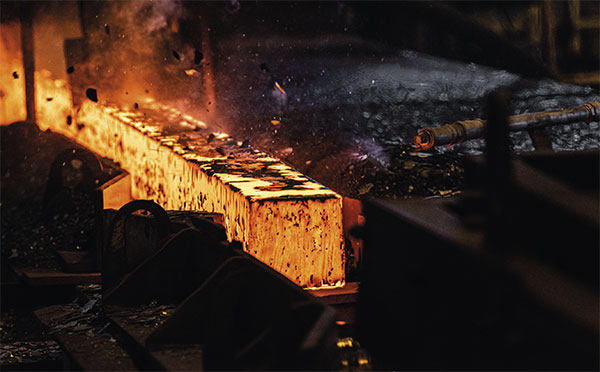
Stronger foundations through lower-emissions reinforcing steel
New Zealand is building at pace. Cities are expanding, infrastructure demand is rising, and expectations around environmental performance are accelerating just as quickly. Yet beneath every building, bridge, and road lies a material that rarely gets public attention, reinforcing steel. It is invisible once poured, but its environmental impact is locked in for decades.
That makes reinforcing steel one of the most consequential material choices in construction today, says Israel MacDonald, sustainability manager at Pacific Steel.
“As the country moves toward a lower emissions economy, the conversation is shifting. It’s no longer enough to ask whether materials perform. Increasingly, we are asking where they come from, how they are made, and what they leave behind,” MacDonald says.
In that context, Pacific Steel’s next generation of reinforcing products reflects what MacDonald describes as a significant shift in how reinforcing steel is being positioned within the construction sector, balancing structural performance with growing pressure around emissions and supply resilience.
“The introduction of Pacific and Pacific DCRB reinforcing steel represents a step change, one that aligns performance, supply security, and climate ambition,” he says.
“Later this year, Pacific will become the new standard: locally produced, proven over decades, and now delivered with significantly lower emissions. Pacific DCRB will go further still, setting a new benchmark for one of the lowest global warming potential (GWP) figures available for locally made reinforcing steel in New Zealand. These are not incremental improvements. They are a redefinition of what ‘standard’ looks like in a market under growing pressure to decarbonise.”
What makes this shift particularly relevant is not just the emissions numbers themselves, but how they are achieved.
“Both products are made using a mix of recycled scrap metal sourced within New Zealand and manufactured using the country’s highly renewable electricity grid. This is lower emissions steelmaking rooted in the local context, utilising local resources, and holding local accountability. It reflects a circular approach that keeps materials in use, reduces reliance on imports, and strengthens domestic capability at a time when global supply chains remain fragile,” MacDonald says.
At the centre of this transition is New Zealand Steel’s electric arc furnace, a “landmark investment” that MacDonald says will significantly reduce carbon emissions while moving the country closer to steel self-sufficiency.
“For Pacific Steel, sourcing 100% of billets directly from New Zealand Steel creates a fully integrated, locally anchored supply chain, that reinforces the credibility of emissions claims and the resilience of supply.”
The importance of local production is often underestimated in discussions about embodied carbon. While some international reinforcing products may report low emissions at the point of manufacture (cradle-to-gate), transport can add a substantial and often overlooked carbon cost by the time steel reaches a New Zealand construction site. Thousands of kilometres by sea can quickly erode claimed environmental advantages when assessed as part of a credible whole of life cycle assessment.
If a comparable product with a cradle-to-gate GWP approximately 0.50 tCO2-e/t were to be produced out of Europe and delivered to NZ, the transport component (A4) would contribute an additional approximately 68% of emissions. If it were brought in from ports in Asia such as Singapore, Vietnam or Korea “we would expect additional transport emissions over 30%”.
“Producing reinforcing steel locally avoids this hidden carbon through a shorter route between manufacturing and use, and in addition can reduce risks associated with longer supply chains. With the substantial embodied carbon reductions, and local supply chain, Pacific DCRB is expected to provide the lowest cradle-to-site embodied carbon (A1-A4 GWP) reinforcing steel solution for projects in the New Zealand market.”
The construction sector sits at a pivotal moment. It is both a major contributor to national emissions and one of the most powerful levers for change. The materials chosen today will define the environmental footprint of New Zealand’s built environment for generations to come.
“Reinforcing steel may be out of sight, but it should no longer be out of mind,” MacDonald says.
“Pacific and Pacific DCRB represent more than new products. They signal a shift in how foundational materials are specified, toward solutions that combine strength, reliability, and lower emissions with local production and supply security. They offer a practical pathway for architects, engineers, builders, and clients to reduce embodied carbon at scale, without waiting for future technologies or unproven alternatives.
“As New Zealand looks toward 2026 and beyond, the direction is clear. If we are serious about lowering emissions, strengthening resilience, and building responsibly, the answer starts at the foundation.”
Sponsored content: For more information visit www.pacificsteel.co.nz.