
Firestop Centre navigates passive fire testing standards
As a distributor for a wide range of local and international passive fire protection brands, the Firestop Centre team has gained valuable insights into international fire testing standards and how they differ from the Australian and New Zealand testing standard AS1530.4.—2014.
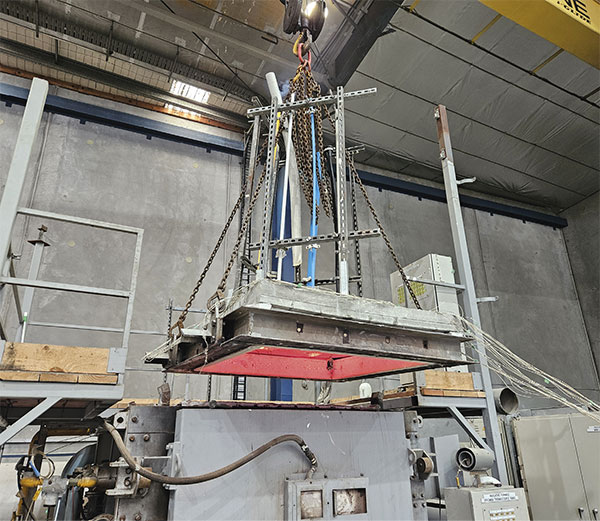
“For example, according to EN 1366-3 – European fire testing standards for penetration seals, all tests are conducted in a full-scale furnace, with no exceptions,” says Greg Hand, director of the Firestop Centre. In contrast, he says, fire testing in Australia and New Zealand is conducted in a pilot-scale furnace in 99% of cases.
“Full-scale testing presents a greater challenge due to deflection and higher pressure on services at the top of the testing frame.”
Another key difference is testing plastic pipes (such as PVC-U, PP-R, PE). Test setups in Australia and New Zealand typically include two metres of pipe extending outside the furnace on the non-fire side. “This is not required under the European standard. Having two metres of pipe outside the furnace creates a stack effect, negatively affecting fire performance, particularly during horizontal testing,” says Hand. This impact is less severe for services tested in walls, making AS testing more challenging to obtain compliance evidence for service penetration solutions in the floor.
European testing also differs in service configuration design. There are four possible scenarios:
• Capped – Capped (closed on both sides of the furnace) or C/C.
• Uncapped – Uncapped (open on both sides) or U/U.
• Uncapped – Capped (open on fire side, closed on non-fire side) or U/C.
• Capped – Uncapped (closed on fire side, open on non-fire side) or C/U.
In contrast, says Hand, AS1530.4 prescribes testing only in one configuration: capped–uncapped C/U.
“Of these configurations, the most demanding tests are uncapped – uncapped and capped – uncapped. By comparison, capped – capped and uncapped – capped configurations are significantly easier to pass.”
The fire resistance rating in Europe appears as EI60 or EI120, where ‘E’ stands for integrity and ‘I’ for insulation, says Hand. In New Zealand and Australia, FRL/FRR appears as -/ 60/60 or -/120/120.
Sponsored content: For more information call +64 9 483 400, email info@firestopcentre.co.nz or visit As a distributor for a wide range of local and international passive fire protection brands, the Firestop Centre team has gained valuable insights into international fire testing standards and how they differ from the Australian and New Zealand testing standard AS1530.4.—2014.
“For example, according to EN 1366-3 – European fire testing standards for penetration seals, all tests are conducted in a full-scale furnace, with no exceptions,” says Greg Hand, director of the Firestop Centre. In contrast, he says, fire testing in Australia and New Zealand is conducted in a pilot-scale furnace in 99% of cases.
“Full-scale testing presents a greater challenge due to deflection and higher pressure on services at the top of the testing frame.”
Another key difference is testing plastic pipes (such as PVC-U, PP-R, PE). Test setups in Australia and New Zealand typically include two metres of pipe extending outside the furnace on the non-fire side. “This is not required under the European standard. Having two metres of pipe outside the furnace creates a stack effect, negatively affecting fire performance, particularly during horizontal testing,” says Hand. This impact is less severe for services tested in walls, making AS testing more challenging to obtain compliance evidence for service penetration solutions in the floor.
European testing also differs in service configuration design. There are four possible scenarios:
• Capped – Capped (closed on both sides of the furnace) or C/C.
• Uncapped – Uncapped (open on both sides) or U/U.
• Uncapped – Capped (open on fire side, closed on non-fire side) or U/C.
• Capped – Uncapped (closed on fire side, open on non-fire side) or C/U.
In contrast, says Hand, AS1530.4 prescribes testing only in one configuration: capped–uncapped C/U.
“Of these configurations, the most demanding tests are uncapped – uncapped and capped – uncapped. By comparison, capped – capped and uncapped – capped configurations are significantly easier to pass.”
The fire resistance rating in Europe appears as EI60 or EI120, where ‘E’ stands for integrity and ‘I’ for insulation, says Hand. In New Zealand and Australia, FRL/FRR appears as -/ 60/60 or -/120/120.
Sponsored content: For more information call +64 9 483 400, email info@firestopcentre.co.nz or visit www.firestopcentre.co.nz.