
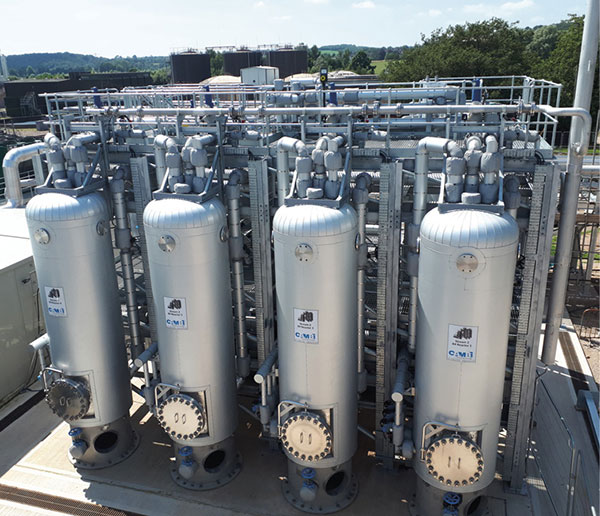
Thermal hydrolysis upgrade set to boost wastewater capacity
Watercare is taking another step to future-proof Auckland’s wastewater system, supporting continued growth while protecting public health and the environment.
An upgrade to the utility’s Rosedale Wastewater Treatment Plant is a step closer following the award of a new contract for technology expected to increase capacity and resilience over the long term.
Watercare has entered into a contract with Norwegian company Cambi to supply two thermal hydrolysis process systems for the Rosedale plant, described as a key investment in long-term infrastructure planning.
“Cambi is the preeminent supplier of thermal hydrolysis process systems globally, with a strong track record of delivering outcomes,” says Rob Burchell, programme director at Watercare.
“We’re excited to partner with Cambi to bring this transformative technology to our Rosedale plant.”
Wastewater treatment remains a critical but largely unseen service, supporting waterways, public health, population growth and housing. With demand expected to increase significantly in northern Auckland, Watercare says it is investing to ensure the system can meet future requirements.
Thermal hydrolysis uses high temperatures and pressure to treat sludge generated during the wastewater treatment process. The new $28 million system, scheduled for delivery in 2028, is expected to enable Rosedale to treat more wastewater efficiently without requiring additional large-scale infrastructure on site.
“We have four digesters at Rosedale. In about a decade, the wastewater flows coming to the plant will almost double when the Northern Interceptor wastewater pipeline is fully in service,” says Burchell.
“Thermal hydrolysis reduces the amount of digested solids so we won’t need to build another digester to cope with the increased flows. It reduces the solids produced by the plant and creates a pasteurised biosolid that can be used as a fertiliser.”
The technology is also expected to increase biogas production, supporting efforts to reduce emissions and improve use of renewable energy generated on site.
“The increased volume of biogas will supply enough electricity to support the plant’s operation and potentially supply some electricity to the grid.
“Rosedale will be the country’s largest thermal hydrolysis facility when the systems are installed.”
The systems form part of a wider programme of upgrades at Rosedale, aimed at supporting population growth, improving wastewater treatment outcomes, and reducing environmental impacts.