
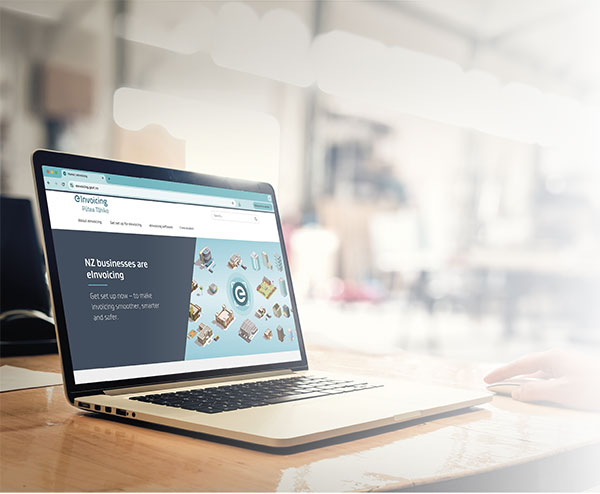
Construction sector drives eInvoicing uptake across New Zealand
New Zealand’s construction industry continues to set the pace in adopting eInvoicing, with recent figures highlighting strong uptake across the sector. Businesses registered to receive eInvoices in construction have surged by 854% since 2023, reaching 9157 in 2026. The sector now represents 17% of all businesses registered for eInvoicing.
For an industry with a significant role in the national economy, the shift is notable. Construction accounts for 7.8% of GDP, the fourth highest out of 16 industries, and comprises 13.2% of all enterprises in New Zealand. It employs one in 10 New Zealanders as their primary job.
The sector’s reliance on cashflow makes payment efficiency critical, and eInvoicing is beginning to address long-standing challenges. Slow payment cycles have long affected the industry, particularly smaller subcontractors who can wait weeks, or months, for payment. Invoices can remain in contractor inboxes and are not always forwarded promptly to the end buyer. Payment delays can lead to stalled projects, delayed materials, and potential impacts on revenue and reputation.
EInvoicing addresses this at source. There are no posted invoices or PDFs sent by email.EeInvoices are transferred directly between buyer and supplier systems, even when those systems differ, arriving instantly. The process removes manual handling, reduces the risk of lost attachments, and supports faster payment cycles.
Government agencies are significant customers for the sector, and policy is supporting the uptake of eInvoicing. Under the procurement rules, most agencies must send and receive eInvoices and pay them within five days, with suppliers required to pass these payment terms through their supply chains.
Alan Carnaby, director smart data economy at Ministry of Business, Innovation and Employment, says the rules are designed to create a domino effect throughout the industry.
“These rules will further improve payment times to small subcontracting businesses and accelerate eInvoicing adoption with our large businesses. They will help ensure the government continues to lead by example in supporting better cashflow and fairer payment practices for suppliers and now their subcontractors.”
With the Government setting direction, the private sector is expected to drive broader adoption across New Zealand businesses.
Two of the country’s largest suppliers to the construction sector, Placemakers and Bunnings, have implemented eInvoicing.
For Placemakers, the move was described as the “logical next step” in improving integration with customer finance systems.
Nod Kininmont, digital delivery lead at Placemakers, says although eInvoicing was not specifically requested, customers were seeking better integration to streamline accounts and improve efficiency.
“EInvoicing was the logical next step. With support from our eInvoicing partner, implementation was straightforward and allowed us to deliver a truly software-agnostic solution to a broader customer base.
“The result is a scalable, future-ready invoicing experience that better reflects the diverse ways our customers operate.”
For Bunnings Group Limited, the transition has delivered operational benefits, says David English, head of credit.
“EInvoicing has made it easier for our business customers to work with us. Thanks to the way eInvoices are transmitted directly between software systems we have seen fantastic improvements including fewer issues with invoices going missing and emails not working.”
“We have seen a sevenfold decrease in transmission failures since making the switch to eInvoicing. These time savings have translated directly into cost savings and efficiencies that have made the investment into getting set up more than worth it.”