
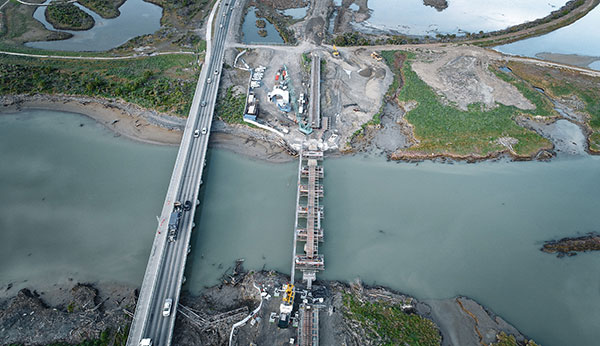
Thirty-year roadmap sets infrastructure direction
The New Zealand Infrastructure Commission has released its National Infrastructure Plan, outlining what it describes as a practical and affordable pathway for delivering the infrastructure New Zealanders will rely on over the next 30 years.
The Plan sets out 16 recommendations aimed at strengthening the foundations of the country’s infrastructure system, alongside 10 priority areas for the coming decade. These include identifying cost-effective flood protection measures, addressing renewal backlogs in the water sector and restoring affordability, increasing hospital investment to meet the needs of an ageing population, and implementing time-of-use charging and road-user charges to improve performance across urban transport networks.
“While the Plan looks at the long term, it’s clear that we need to take action now. Weather events and infrastructure failures make very clear the importance of investing to renew and build resilience into the networks that sustain our way of life,” says Commission chief executive Geoff Cooper.
“We can’t keep doing what we’ve always done.
“Each year we invest just over $20 billion on infrastructure, yet on a dollar-for-dollar basis we achieve less than many of our more efficient international peers.”
“The Plan is ambitious, but centred on affordability,” Cooper says.
The Commission says the document provides decision-makers with a system-wide view of emerging pressures and highlights where investment is likely to deliver the greatest long-term value.
“The Plan responds to a period of immense change facing New Zealand. Demographic changes, the impacts of climate change, and technological innovations are all reshaping the demands on the hospitals, schools, water systems and transport networks that New Zealanders depend on every day,” Cooper says.
“Some of the infrastructure issues we’re facing have been decades in the making – and they’ll take time to fix.
“But New Zealand also faces acute pressures that require attention now. Addressing the top 10 priority areas identified in the Plan will result in visible infrastructure gains and support our longer-term recommendations for the next 30 years.
“The Plan does this by charting an affordable way to meet a diverse set of infrastructure demands over time and identifying how a large programme of significant investments such as roads, rapid transit, and hospitals can be prioritised and sequenced. In doing so, the Plan demonstrates a fundable and affordable programme of works that futureproofs existing services, while incrementally building on the network as the country grows and develops,” Cooper says.
The final Plan follows consultation on a draft released in June 2025. Feedback indicated strong agreement on the need for greater certainty, improved coordination and a sharper focus on delivery and affordability, which the Commission says has informed the final version.
“A plan by itself won’t change anything. The National Infrastructure Plan charts the course, but progress depends on how decision-makers, delivery agencies, industry, and communities use the Plan to do things differently,” Cooper says.
Association welcomes Plan
Civil Contractors New Zealand has “welcomed” the release of the Plan, saying it reflects many of the priorities long advocated by the industry.
Chief chief executive Alan Pollard says the Plan acknowledges the need for a strategic approach to delivering and maintaining resilient infrastructure.
“This Plan echoes many of the concerns and solutions put forward by our sector, particularly around the need for true pipeline certainty, practical consenting, and robust, durable funding mechanisms,” he says.
Pollard says the industry is encouraged by the recognition of infrastructure’s role in the country’s economic performance and quality of life but warns that plans must translate into projects on the ground.
“Too often, projects remain on paper or are delayed by regulatory and funding uncertainty, hampering both the industry and community outcomes.
“Construction businesses need confidence that projects listed in the pipeline will be funded, consented, and delivered as planned. Otherwise, we risk perpetuating the ‘boom and bust’ cycle that undermines investment in skills, innovation, and regional capacity.”
He says stronger resilience investment will also be critical as severe weather events become more frequent.
“It’s one thing to call for more maintenance and to look after what we’ve got, but we would like to see more action around resilience and projects to protect communities. We need to ensure key infrastructure isn’t vulnerable to severe weather events, so it makes sense to think with clear priorities at a national level, rather than respond when something falls over.”
Pollard adds that simpler and more practical regulation will also help improve project delivery, alongside greater investment in workforce development to ensure the sector has the skills needed to deliver the country’s long-term infrastructure programme.
The National Infrastructure Plan is available online at www.tewaihanga.govt.nz.