
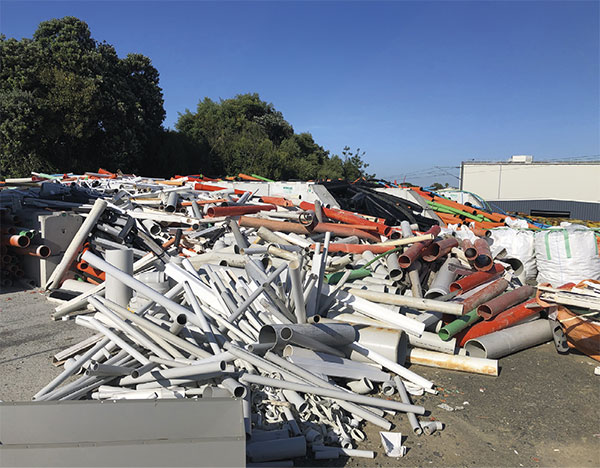
Every home built in New Zealand typically generates around four tonnes of construction waste. In Auckland alone, at least 30% of all waste going to landfill is construction and demolition waste. That’s a significant figure and one that’s increasingly a focus for councils, industry bodies, and businesses themselves, in a push for smarter, more sustainable building practices.
“The site manager is in a key position to help with this issue; keeping the site tidy and ensuring waste is sorted correctly helps avoid environmental breaches and potential fines and minimises waste,” says Mark Roberts, senior waste planning specialist, waste solutions, Auckland Council.
“Among the many materials used on site, plastic waste is a growing concern in the construction industry. Plastic waste that’s not properly managed can cause serious problems. Overflowing bins and loose offcuts can end up in stormwater drains or public spaces, harming freshwater ecosystems and creating health risks. “
Yet some plastic waste can be reused. One material that stands out for its potential to be reused again and again: unplasticised polyvinyl chloride (uPVC). Commonly found in pipes, spouting, conduit, and fittings, uPVC is tough, long-lasting and highly recyclable.
Despite this, on many building sites PVC offcuts still end up in general skip bins, with up to 10,000 tonnes sent to landfills every year in New Zealand. Also, once PVC offcuts are mixed with other materials or contaminated with concrete, tape, glue, or soil, they can’t easily be recycled. That’s a missed opportunity for businesses and project managers looking to meet sustainability goals and reduce waste costs.
Why PVC recycling matters
PVC can be recycled multiple times without losing its quality says Roberts. Clean offcuts and end-of-life products can be processed into new items like gravity drainage pipes and electrical ducting. Recycling PVC reduces the need for virgin materials, cuts down on carbon emissions, and supports a more circular construction economy.
But for recycling to work, it starts on site. That’s where project managers come in.
Simple steps to make PVC recycling work
There is no need to overhaul the development’s entire waste management system to make a difference, explains Roberts. A few small changes can have a big impact:
• Separate PVC early: Set up clearly labelled bins for clean PVC offcuts. Keep them free from concrete, adhesives, and soil.
• Educate the team on site: Make sure everyone knows what clean PVC looks like; no concrete attached, glue-free offcuts from new installations. Even end-of-life pipes and spouting can be recycled if major contamination is removed.
• Work with the site’s waste collector: Ask them about PVC recycling options. Many collectors are already supporting recycling programmes and can help set up the right systems on site.
Industry support
PVC recycling isn’t just a good idea – it’s already happening. Marley New Zealand runs a dedicated PVC recycling programme that accepts clean offcuts and end-of-life products. These materials are turned into new construction products, keeping valuable resources in use.
“Plastics Recycling NZ operates the facility that processes this material, showing that the infrastructure is ready and waiting. All that’s needed is more participation from construction businesses and site managers,” says Roberts.
Marley New Zealand’s PVC recycling initiative was first trialled with support from Auckland Council’s Waste Minimisation and Innovation Fund, which helps organisations and businesses pilot and scale up innovative waste solutions.
“The collaboration between Marley, waste collectors, recyclers, and council demonstrates how we can work together to close the loop on construction plastics like uPVC.”
Waste is a resource
In today’s construction environment, waste is no longer just something to get rid of. It’s a resource that can be reused, repurposed, and reinvested into the industry. Treating PVC offcuts as part of this resource stream is a simple mindset shift – and one that’s easy to act on.
Dwayne Carroll, project lead for recycling and sustainability at Marley New Zealand says, “The problem of uPVC waste is a big one but if you get everyone working together then systemic problems like this can be solved. That’s exactly what we’re doing and is the reason why we’re able to offer an industry wide solution to such a big challenge.”
Users can find a Marley recycling drop-off location for uPVC materials on the Marley New Zealand website or checkout the Plastics Recycling NZ website for criteria and how to take advantage of dropping off direct to the recycling plant in Penrose.
Sponsored content: For more information and to recycle or dispose of construction waste visit www.aucklandcouncil.govt.nz/whereitgoes.