
Construction courses develop next-gen at Te Herenga Waka–Victoria University of Wellington
New Zealand’s construction sector faces significant challenges, including the need to build thousands more homes affordably, a massive backlog of infrastructure projects, and the urgent need to adapt buildings and cities for climate change resilience.
“There is a critical need for a new generation of construction graduates in Aotearoa New Zealand who understand modern methods of construction. Victoria University is addressing these challenges in our new Bachelor of Construction (subject to regulatory approval) and three new majors in our Bachelor of Building Science, and our Master of Building Science, Master of Construction (subject to regulatory approval), and Master of Construction Law,” says Dr Anotny Pelosi, senior lectures, Facility of Architecture and Design Innovation.
“The School of Architecture is proud to be educating a new generation of tech-savvy graduates who can lead and transform the construction sector. Our degrees are very flexible to enable students to follow their interests in digital technologies and AI, robotics, heritage, low carbon and sustainable building practices, health and safety, building surveying, procurement and scheduling, smart cities and infrastructure, or Māori land and development,” says Pelosi.
Courses are delivered alongside architecture programmes, giving graduates the tools to collaborate with other professionals to successfully deliver complex projects. The flexible structure enables students to take a major or elective from another programme.
New programmes in the School of Architecture
Students in programmes will gain expertise in using advanced methods to complete modern construction projects, including designing for the integration of tools such as digital twins, planning and scheduling the logistics using VR and building simulations, enhancing productivity using offsite manufacture, 3D printing and robotics, and managing project delivery using scanning, AR, and remote sensing and imaging.
“Students will gain expertise in sustainability including reducing construction waste, circularity, and low carbon materials. Understanding the importance of Māori land issues and Mātauranga Māori is a key theme of the degrees,” says Pelosi.
Pelosi says that these new programmes have been made possible thanks to “a very generous grant” from Sir Mark Dunajtschik.
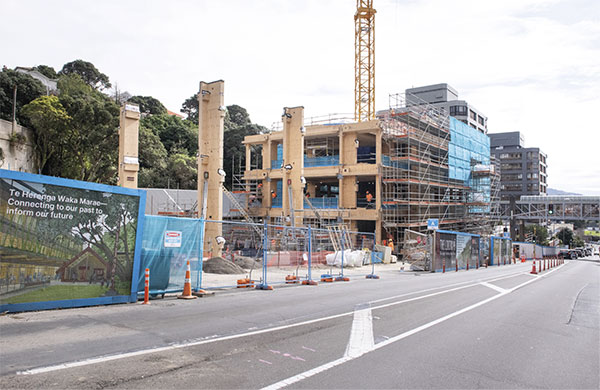
The success of Ngā Mokopuna: The Living Building
“Victoria University is proud to be leading advanced construction projects by example, with our new Living Pā, Ngā Mokopuna. Ngā Mokopuna was designed to the Living Building Challenge standards, which are the highest international level of sustainability,” explains Pelosi.
Ngā Mokopuna is self-sufficient. It can generate all its own electricity, collect all required water, and manage all its own wastewater, and was designed and constructed to give back to the local ecology and community.
LT McGuinness, lead contractors for Ngā Mokopuna, won the Supreme Award for Commercial Projects over $10 million at the 2025 Master Builders Commercial Awards.
Judges commented that given Ngā Mokopuna is one of New Zealand’s most complex buildings, its success is a testament to the shared vision, determination, and commitment of everyone involved.
“LT McGuinness were remarkable to work with on this project, and we are delighted they have been recognised with this prestigious award. Ngā Mokopuna was only possible with collaboration at the highest level as we needed to weave Mātauranga Māori with environmental innovation, and community connection,” says Deputy Vice-Chancellor Māori and Kaitiakitanga, Professor Rawinia Higgins.
Sponsored content: For more information phone 0800 04 04 04 or visit www.wgtn.an.nz.