
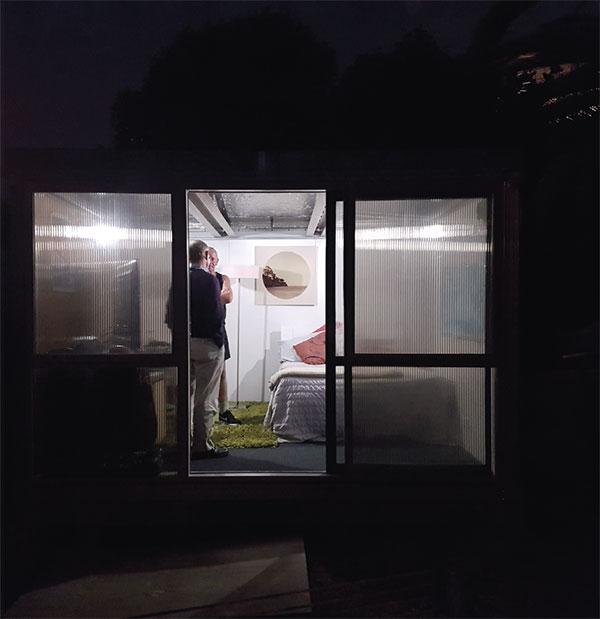
Vigilante builder set on disrupting with unique sustainable modular construction
A self-described “vigilante builder” with an environmental background is out to disrupt the building industry with a unique lightweight, zero-waste building system. He says he’s “well ahead” of the Building 4.0 movement. The biggest challenge? Getting authorities on board.
Murphy O’Neal grew up figuring things out. The child of an architect mother who became an environmental specialist, he got an early education in being creative when his mother removed instructions from models to make the gift last longer.
Today, O’Neal applies that problem solving to modern construction methods and his company Adaptable Structures designs zero-waste, modular building solutions that are also future proof.
As needs changes, families grow or shrink, Adaptable Structures’ ‘Anyplace’ can be reconfigured. Add a room, or remove a room, and sell it on.
The product works for industrial, commercial or residential needs and O’Neal says it is underpinned by both technologies, and changing tastes as housing becomes increasingly unaffordable.
“The 20-somethings working for me see housing as a mountain they can’t even see the top of, let alone think about coming down the other side.”
Adaptable Structures seeks to solve that inequity. It is enabled by both the precision of CNC manufacturing and the availability of low carbon, recyclable aluminium in New Zealand.
In layman’s terms, it’s a bit like Lego. Young people could start with an affordable home, but one pre-permitted to simply add another room as needs changed.
Or as people aged, instead of moving due to disability, “why not make a house that adapts to your disability?”. The whole concept is about ending waste.
American born, O’Neal believes so passionately in his company he sold his own home to finance it. The idea combines his own environmental experience – an environmental expert, he’s seen every bit of a home in landfill and he’s trying to end the entrenched views in the building market of “it’s got to be done this way”.
“There’s no pathway to innovation in construction.”
The Christchurch earthquakes and the amount of waste it generated, plus the long rebuild, put him on the path to “industrialising home building”.
“There had to be a better way.”
The misconception of aluminium not being a building material has been a challenge. He grew up around aviation and says the lessons from planes – like structural and thermal properties – can apply to homes. “Airplanes and boats started out as wood.”
As Adaptable Structures prepares to move from design to build and release, O’Neal is switching his focus to education, talking to everyone he can including policy makers, community housing providers and industry experts.
Will Kiwis like it? O’Neal says the problem isn’t taste, it’s systemic – such as banks only lending on traditional model housing. “It’s oppressive.”
But everybody is looking for the modern method of construction, he says.
The system is now in the “validation” and design refinement stage. “I’m just going to do it,” he says of moving to manufacturing, while continuing to advocate for legislation that supports what he’s doing. He sometimes spends nights poring over policy and legislation to identify the obstacles.
He’s not worried about upsetting traditional tradies in house building. He’s engaged with people from all areas of the industry and says they understand he’s not trying to work against them.
“I’m trying to work with them. And obstacles just make you stronger. You learn, change and adapt.”